
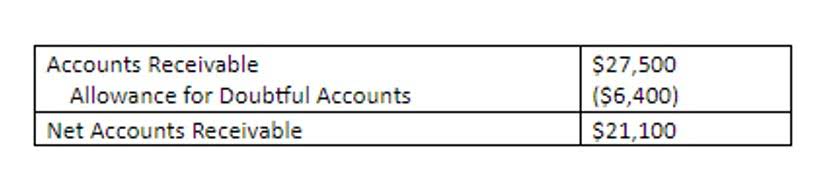
Having an accurate, up-to-date idea of what assets are worth serves many useful Accounting For Architects purposes. During periods of economic turmoil, market-based measurements may not accurately reflect the underlying asset’s true value. Mutual funds are also marked to market on a daily basis at the market close so that investors have a better idea of the fund’s net asset value (NAV). In this situation, the company would record a debit to accounts receivable and a credit to sales revenue for the full sales price.
- As soon as runners reach Eagle, they will make the transition to the next runner.
- By continuously updating asset values, financial institutions can identify and mitigate potential losses before they escalate.
- Investors often respond to this fresh info, which can lead to increases or declines in stock price, reflecting the company’s updated value in real-time.
- It’s easy to see why mark-to-market accounting can be used for assets with a high degree of liquidity, because the current market price of many of these assets is readily available, even to everyday retail investors.
- But using mark to market accounting can give investors a full picture of how market conditions have affected a company’s investments.
- It is not, nor is it intended to be, trading or investment advice or a recommendation that any security, futures contract, digital asset, other product, transaction, or investment strategy is suitable for any person.
What are MTM Accounting Standards?
In this article, we will understand what the concept of mark to market is and how it helps in managing credit risks. California actually follows federal MTM treatment pretty closely, so you’re in good shape there. They won’t automatically adjust your reporting for MTM (no broker really does), but they provide detailed enough transaction history that you can work with it. I personally switched to Interactive Brokers because they have more detailed reporting options and their platform is designed with active traders in mind.
Mark-to-Market Accounting vs. Historical Cost Accounting: What’s the Difference?
MTM forces financial institutions to recognize losses immediately, preventing them from carrying assets at inflated Historical Cost values. This transparency is crucial for regulators and counterparties to assess a firm’s true exposure. These inputs include quoted prices for similar assets in active markets, or quoted prices for identical or similar assets in markets that are not active. They also encompass inputs derived from observable market data, such as interest rates and yield curves. While MTM accounting is important and widely used, it also has some potential drawbacks. For example, MTM can lead to volatility by forcing companies to report unrealized losses, even if they do not actually intend to sell them.

This page contains information regarding Options Trading
However it is by no means perfect, and there are several pros and cons to MTM. Consider the benefits of hiring a business consultant to help navigate complex MTM strategies and reduce risks. The previous year’s loss is written off from the first available gain, and if there is an excess gain over and above the loss, it is recorded in the books as Gain on Securities. The content herein has been online bookkeeping prepared on the basis of publicly available information believed to be reliable.
- Mark-to-market accounting also refers to a special election that day traders are allowed to select when they file their taxes with the IRS.
- Although it can sometimes exacerbate volatility in the markets, MTM accounting is generally seen as a necessary and positive component of our financial markets and reporting practices.
- However, if the current market price is lower than the purchase price, the asset has a loss.
- Any gain or loss from fluctuations in the market value of assets classified as available for sale will be reported in the other comprehensive income account in the equity section of the balance sheet.
- How much you pay depends on several factors, one of which is your state of residence.
Key Steps in the Mark to Market Process

This was highlighted by the Great Financial Crisis of 2008 which resulted in instability in the financial system. If institutions are required to mark all their assets to market, they may be required to sell assets when prices are falling, which causes prices to fall further. Any gain or loss from fluctuations in the market value of assets classified as available for sale will be reported in the other comprehensive income account in the equity section of the balance sheet. Marking to Market (MTM) means valuing the security at the current trading price.
How to Use Oscillators to Confirm Stock Trends
By marking the position to market each day, the profit or loss can be settled daily to avoid a situation where the broker is left with a large loss. In this example, if the price fell below 3,160, the initial margin would no longer cover the loss. Historical cost accounting with depreciation is suitable for assets like machinery, vehicles and furniture. When it comes to assets that don’t necessarily depreciate, a valuation estimate from an independent expert or appraiser is more appropriate.

How Does MTM Work?
- Available for sale securities are the most common example of mark to market accounting.
- If the price climbs, the party holding the long position sees gains, reflective of the market’s dynamism.
- Runners continue down the Mopac Trail heading west towards the next exchange point in Eagle, Nebraska.
- MTM is a crucial concept that impacts various financial instruments and plays a significant role in financial reporting.
- These advantages are especially relevant to active trading businesses, funds and institutions holding large portfolios of market-sensitive instruments.
- When assets or liabilities can be valued using MTM methods, it gives potential stakeholders a realistic opinion of their value.
The deadline is actually the tax filing date (including extensions) for the previous year. So to make the election for 2025, you must include the statement with your 2024 tax return that you file in 2025. This is why many people get confused – if you want MTM treatment for 2025, you must act during the 2024 tax filing season. The statement needs to identify which accounts are trading accounts subject to MTM and which are investment accounts. It’s a bit technical, which is why having a tax professional review it the first time is valuable.
Mark To Market (What It Is And How It Works: All You Need To Know)
For example, an asset purchased at $500,000 will be recorded as having a historical cost of the same amount. For example, companies that are traded publicly are required to publish their financial statements on a regular basis. The process of marking to the market is an accounting operation as the company does not sell the asset or security being marked. While MTM is not the villain of these stories, it is a powerful force that can amplify financial distress during times of market stress. It can create a feedback loop, where falling asset values lead to more selling and further drops in value—a dynamic that every investor should be aware of. Fast forward to March 2023, and we see echoes of the past with the fall of some regional banks.
The Values Impacting Land Prices From the Buyer and Seller’s Perspective
Their gains or losses are recorded as either short-term or long-term capital gains. The mark-to-market gain or loss is unrealized but must be reported on the holder’s mark to market accounting tax return. It’s recommended to use reputable tax and accounting services to handle these complex filings. Mark to market (or MTM, if you prefer accounting abbreviations) is an accounting method that values assets based on their current price on the market, showing how much a company can make if it sells the asset today.
What is Mark to Market (MTM) Exactly? 📚
Mark to market introduces several concrete risks that must be managed through governance, capital planning and disclosure. These risks become acute in illiquid markets or episodes of stress, when observable prices may not reflect a typical, orderly transaction. Mark to market serves distinct roles across trading, portfolio management and institutional accounting. The three primary uses—speculation, hedging, and arbitrage—each rely on fair-value accounting to different ends. Below, each use is explained in brief with illustrative examples that connect operational practice to accounting outcomes. While allowed, MTM is not mandatory for certain assets under these standards.